Clarity for thoughtful Christians, curated every day.
Christian Curator is a daily front page for the evangelical conversation, plus a library of 70 topic guides. Think of it as RealClearPolitics for evangelicals: one place to see what matters today, from trusted sources, without the noise.
The front page also arrives by email each morning. Receive the Daily Digest.
The short version
- Who runs it. Tom Daly, a Teaching Pastor at Lancaster Evangelical Free Church in Lititz, Pennsylvania. More about Tom.
- What it is. A homepage and morning email that rank the day’s most important evangelical news and commentary, plus in-depth topic guides on the questions Christians keep asking.
- How sources are chosen. A maintained list of RSS feeds from evangelical publishers, ministries, writers, podcasts, and channels, scored each morning against an editorial rubric. Details below.
- How it stays fair. Broadly evangelical, not one camp. Where the family disagrees, we show the best case on more than one side. Details below.
- How to reach us. Reach Tom on LinkedIn, X, or Instagram with questions, corrections, or a source we should be reading. Details below.
Why Christian Curator exists
The Christian internet has never been noisier. Every day, thousands of articles, essays, podcasts, and hot takes compete for our attention, and much of it is shallow, reactive, or designed to inflame more than inform. Serious believers are asked to filter an ocean to find a cup of clean water.
Christian Curator exists to do that filtering work for you. Every morning we read about seventy-six trusted Christian publishers, ministries, writers, podcasts, and video channels, and we surface what matters most: the news evangelicals need to know, the debates worth following, and the writing that will actually feed your soul.
We’re building the trusted daily brief for thoughtful Christians, the one you’d hand a pastor, a skeptic, or a busy parent alike.
The daily front page
The homepage is rebuilt every morning, and the same picks go out in the daily email. Each article links straight to the original publisher, under its original headline. Here is what is on it:
- The Daily Pulse. A short summary of what the evangelical world is talking about today. Each day’s Pulse is saved, so you can look back.
- The Lead. The four most important stories of the day, each from a different source.
- The board. Three columns of headlines: News, Commentary & Debate, and Church & Theology, with no single publisher allowed to dominate a column.
- The Debate. When two serious writers take opposing positions on the same question, we put them side by side, with each thesis stated plainly. Most days there is no genuine pairing, and then we leave the section out rather than force one.
- Worth Your Time. Five pieces chosen for depth rather than news value: theology, formation, and long reads that will still be worth reading next year.
- Watch and Listen. A few recent videos and podcast episodes from trusted evangelical teachers and shows, such as Gavin Ortlund’s Truth Unites, Mere Fidelity, and the BibleProject podcast.
- Research & Data. New surveys and studies on faith and the church.
Past days live in the archive.
The topic guides
Alongside the daily flow, we maintain 70 topic guides on the conversations that don’t go away, from the atonement and baptism to AI, Christian nationalism, and mental health. Each one is edited by hand: a framing essay, the key questions people are asking, a fair presentation of the main evangelical positions and the thinkers behind them, a synthesis, and a curated reading list with a note on why each piece is there. New articles from the daily feed are added to each guide as they come in.
Two places to start: Biblical Literacy: How to Read the Bible, and What Is Faith Deconstruction?, for anyone walking with a friend, a child, or a church member through hard questions.
How we choose sources and stories
The sources
Christian Curator pulls from a maintained list of about seventy-six RSS feeds: evangelical publishers and ministries (The Gospel Coalition, Desiring God, Christianity Today, Ligonier, 9Marks, the ERLC, Mere Orthodoxy, and others), independent writers and Substacks, religion newsrooms, and a shorter set of podcasts and video channels for Watch and Listen. Tom sets the editorial standards for what belongs on that list. Feeds are added when they publish regularly and are consistently worth reading, and removed when they go quiet, break, or slide into junk. The morning run itself is automated: every feed on the list is fetched, and the day’s stories are ranked by the rubric below.
The rubric
Every new article is scored on two separate questions. Importance: how much does this matter to evangelicals today, as news, as a significant development in the church, or as a live debate? Depth: how theologically grounded, careful, and formative is it? Importance orders the front page. Depth fills Worth Your Time. Keeping them separate means a breaking story doesn’t crowd out a great essay, and a great essay doesn’t bury the news.
Where AI fits, and where it doesn’t
We use AI to read at scale, far more than any one editor could each morning. It applies the rubric, sorts stories into columns, and drafts the Daily Pulse. The judgments that shape the site are human: the editorial standards for the feed list, what the rubric rewards and penalizes, how the page is laid out, and every word of the topic guides. When the daily ranking gets something wrong, we fix the feed list or the rubric rather than shrug. We never publish AI-written articles; every headline on the site links to a real piece by a real author at its original publisher.
How we stay fair
We’re a broadly evangelical publication. We draw from Reformed, Baptist, Anglican, Pentecostal, and non-denominational voices, and we aim to represent the best of the evangelical conversation rather than one narrow camp within it. Where the family of evangelicalism genuinely disagrees (baptism, the gifts of the Spirit, eschatology, women in ministry, politics), we present the strongest thinking on more than one side rather than smoothing it into a single line.
A few practical guardrails help:
- No single publisher can take over the front page. The Lead uses four different sources, and each board column caps how many headlines one outlet can place.
- The Debate pairs real opposing arguments, not a news report against an opinion piece. If no honest pairing exists that day, the section is left out.
- Each topic guide lays out the main evangelical positions side by side, with the thinkers who hold them, before offering any synthesis.
- We give smaller, independent writers a fair hearing alongside the big ministries.
What you will not find here: clickbait, rage-bait, AI-generated articles passed off as original work, or content engineered for engagement at the expense of truth. We’d rather surface ten excellent pieces than a hundred mediocre ones.
Our statement of faith
Christian Curator stands within the great stream of historic, orthodox Christianity, confessing the faith of the Apostles’ and Nicene Creeds. More specifically, our doctrinal convictions align with the Statement of Faith of the Evangelical Free Church of America (EFCA), the denominational home of Lancaster Evangelical Free Church, where Tom serves as a Teaching Pastor. What follows is a paraphrase of the EFCA’s ten articles in our own words; the official statement governs.
- God. We believe in one God, eternally existing in three equally divine Persons (Father, Son, and Holy Spirit), who knows all things, does all His holy will, and is worthy of all worship.
- The Bible. We believe Scripture is God’s Word, verbally inspired, without error in the original writings, and the complete revelation of His will for salvation. It is our supreme and final authority for all that it teaches.
- The human condition. We believe God created humanity in His own image, but that all people have sinned and are alienated from God. Apart from divine grace, we are incapable of remedying our lost condition.
- Jesus Christ. We believe in Jesus Christ, fully God and fully man, conceived by the Holy Spirit and born of the virgin Mary. He lived a sinless life, performed miraculous works, died a substitutionary death, rose bodily, ascended to the Father, and now reigns as our High Priest and Advocate.
- The work of Christ. We believe Jesus Christ, as our representative and substitute, shed His blood on the cross as the perfect, all-sufficient sacrifice for our sin. His atoning death and victorious resurrection are the only ground of salvation.
- The Holy Spirit. We believe the Holy Spirit convicts the world of sin, regenerates and indwells every believer, and equips the church for godly living and faithful service.
- The church. We believe the true church consists of all who have been justified by God’s grace through faith alone in Christ alone, the one body of Christ, called to worship, fellowship, discipleship, and the ministry of the gospel. Its ordinances are baptism and the Lord’s Supper.
- Christian living. We believe that God’s justifying grace must not be separated from His sanctifying power and purpose, and that a genuine faith bears fruit in love, holiness, justice, compassion, and the making of disciples among all nations.
- Christ’s return. We believe in the personal, bodily, and glorious return of our Lord Jesus Christ, the hope that animates our waiting and fuels our work.
- Response and eternal destiny. We believe that God commands everyone everywhere to repent and believe the gospel, and that those who trust in Christ will spend eternity in joyful communion with God, while those who reject Him will be separated from Him forever.
We also stand within the Protestant evangelical tradition shaped by the Reformation’s five solas (Sola Scriptura, Sola Fide, Sola Gratia, Solus Christus, and Soli Deo Gloria), a shorthand for what we hold precious about the gospel.
These commitments shape what we surface, how we evaluate, and where we draw editorial lines. They also guard us from two failure modes: a progressivism that loses the gospel, and a fundamentalism that loses the neighbor. We aim to honor Scripture and love our neighbors, together, without apology.
About Tom
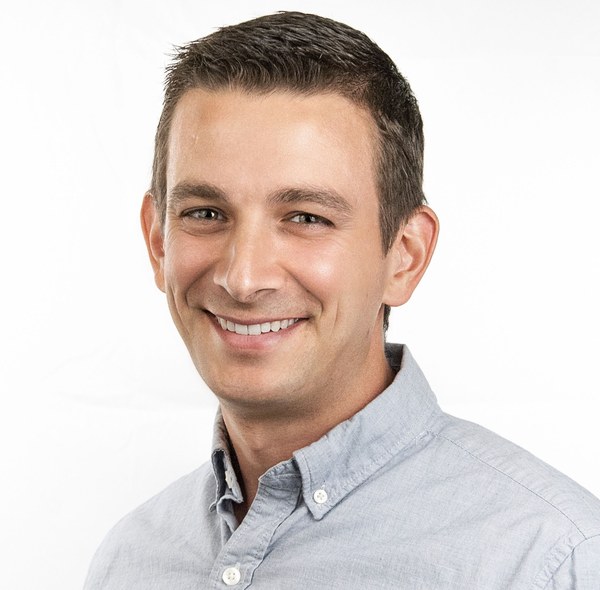
Hi, I’m Tom. I started Christian Curator at the intersection of three parts of my life that rarely get put on the same page: pastoral ministry, entrepreneurship, and engineering.
I serve as a Teaching Pastor at Lancaster Evangelical Free Church (LEFC) and have been a longtime business owner and elder. I’m married, with three kids, and I’ve spent years thinking about how the best of modern technology can be put to work in service of the local church and the broader body of Christ.
Christian Curator is one expression of that conviction. My hope is that it gives busy, thoughtful believers a daily cup of clarity, and helps the most substantive voices in evangelical Christianity reach the readers who need them most.
Grace and peace,
Tom
Contact us or suggest a source
Christian Curator is a small operation, and Tom reads every message himself. Reach him on LinkedIn, X, or Instagram to:
- Suggest a source. A publication, writer, podcast, or channel we should be reading. Include a link, and a sentence on why it belongs.
- Flag a correction. A broken link, a mislabeled article, or a topic guide that misstates a position.
- Ask a question or share feedback. Pastors and editors are especially welcome.